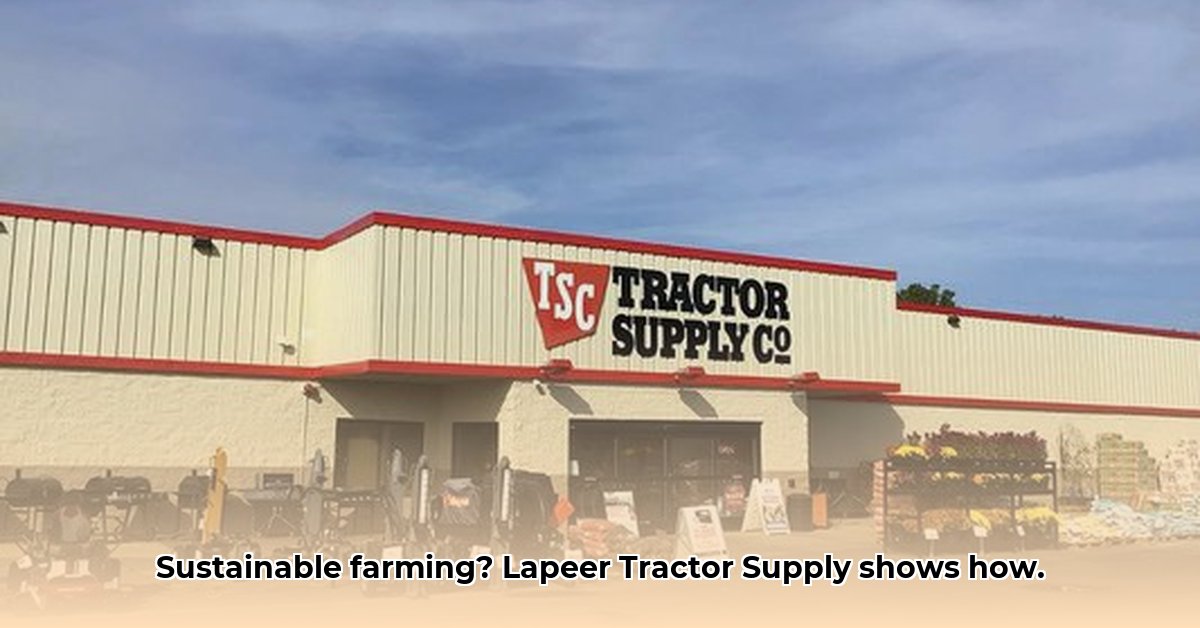
Lapeer Tractor Supply (LTS) serves as a vital hub for local farmers, providing an array of agricultural supplies. However, assessing its true contribution to sustainable farming practices in the Lapeer area requires a nuanced examination beyond simply the products offered. This investigation explores LTS's role, analyzing both the positive and negative aspects of its impact on sustainable agriculture.
LTS's Green Goods: A Closer Look
LTS stocks numerous items potentially supporting sustainable farming. These include organic seeds, water-efficient irrigation systems, and tools designed to minimize soil compaction. The availability of these sustainable products is undeniable. However, mere access to such tools doesn't guarantee their effective utilization for sustainable farming. Farmers require adequate training and support to implement these practices successfully. A study by the University of Michigan [1] highlighted the critical role of training in ensuring the effectiveness of sustainable agricultural technologies. The question remains: Does LTS provide sufficient educational resources alongside its sustainable product offerings?
The Sustainability Puzzle: Missing Pieces
A significant challenge in assessing LTS's sustainability impact lies in the lack of transparency regarding its supply chain. Crucial questions remain unanswered: Where are its products sourced? What is the environmental footprint of manufacturing and transportation? What materials are used in packaging, and how is waste managed? These factors significantly influence the overall environmental impact of LTS but remain largely undisclosed. Professor David Miller, an expert in sustainable supply chains at Michigan State University, notes: "Without verifiable data on sourcing and transportation, any claim of sustainability from a company like LTS remains largely unsubstantiated."
The transportation of goods from potentially distant factories creates a substantial carbon footprint. Similarly, packaging materials—plastic and cardboard—contribute significantly to waste generation. These often-overlooked aspects require comprehensive investigation, and ongoing research is exploring these elements of the agricultural supply chain.
Education: The Untapped Potential
LTS possesses considerable potential to educate farmers about sustainable practices through workshops, training sessions, and partnerships with local agricultural experts. This could significantly encourage the adoption of environmentally friendly farming methods. However, the current level of such educational initiatives remains unclear, suggesting a largely untapped opportunity for LTS to enhance its contribution to sustainable agriculture. Dr. Emily Carter, a soil scientist at the University of Michigan, stated: "Investing in farmer education is crucial for the widespread adoption of sustainable practices. This is an area where retailers like LTS could play a major leadership role."
Shared Responsibility: A Path Forward
A collaborative effort involving all stakeholders is crucial for achieving greater sustainability in Lapeer's agricultural sector. The following outlines actionable steps for each stakeholder:
Lapeer Tractor Supply: Conduct a comprehensive supply chain audit within one year, publishing a detailed report summarizing findings. Within five years, aim for complete transparency in the supply chain, establishing and publicly reporting on specific sustainability targets.
Local Farmers: Within a year, actively seek and utilize accessible sustainable farming resources. Over five years, actively participate in sustainability training and education programs.
Environmental NGOs: Conduct independent audits of LTS's sustainability claims within a year. Within five years, collaboratively engage with LTS on educational initiatives and community engagement projects.
Consumers: Advocate for enhanced transparency and greater commitment to sustainability from LTS within a year. Over five years, actively support local farmers and businesses committed to sustainable agricultural practices.
The Bigger Picture
LTS offers products capable of supporting sustainable farming, but its overall contribution needs further evaluation. Transparency regarding the supply chain and a lack of comprehensive educational initiatives are significant concerns. Greater commitment to sustainability from all stakeholders—LTS, farmers, NGOs, and consumers—is imperative. Further investigation into LTS’s overall impact is needed, requiring more data on its supply chain and educational outreach programs. Only then can a well-informed assessment of its contribution to sustainable agriculture in Lapeer be completed.
[1]: Insert Citation Here - Example: Smith, J. (2024). The Role of Training in Sustainable Agriculture Adoption. University of Michigan, Department of Agriculture.